What the Report Found
A new investigative report published August 13 in The American Prospect puts it plainly: no Asian or Pacific Islander community has been safe from the Trump administration's mass deportation machine — and Minnesota's Hmong community is one of the sharpest examples of that reality. The piece pulls together the full scope of what APIDA communities across the country have faced under accelerated federal immigration enforcement, with the Twin Cities front and center.
The report draws on data from U.S. Immigration and Customs Enforcement showing that the most recent release of ICE enforcement data only describes actions through early March 2026 — meaning the true scale of arrests and removals since then is still not fully known to the public. That gap matters for families in St. Paul and Minneapolis who have been living inside that data void for months.
Scott Thao's Story — Again
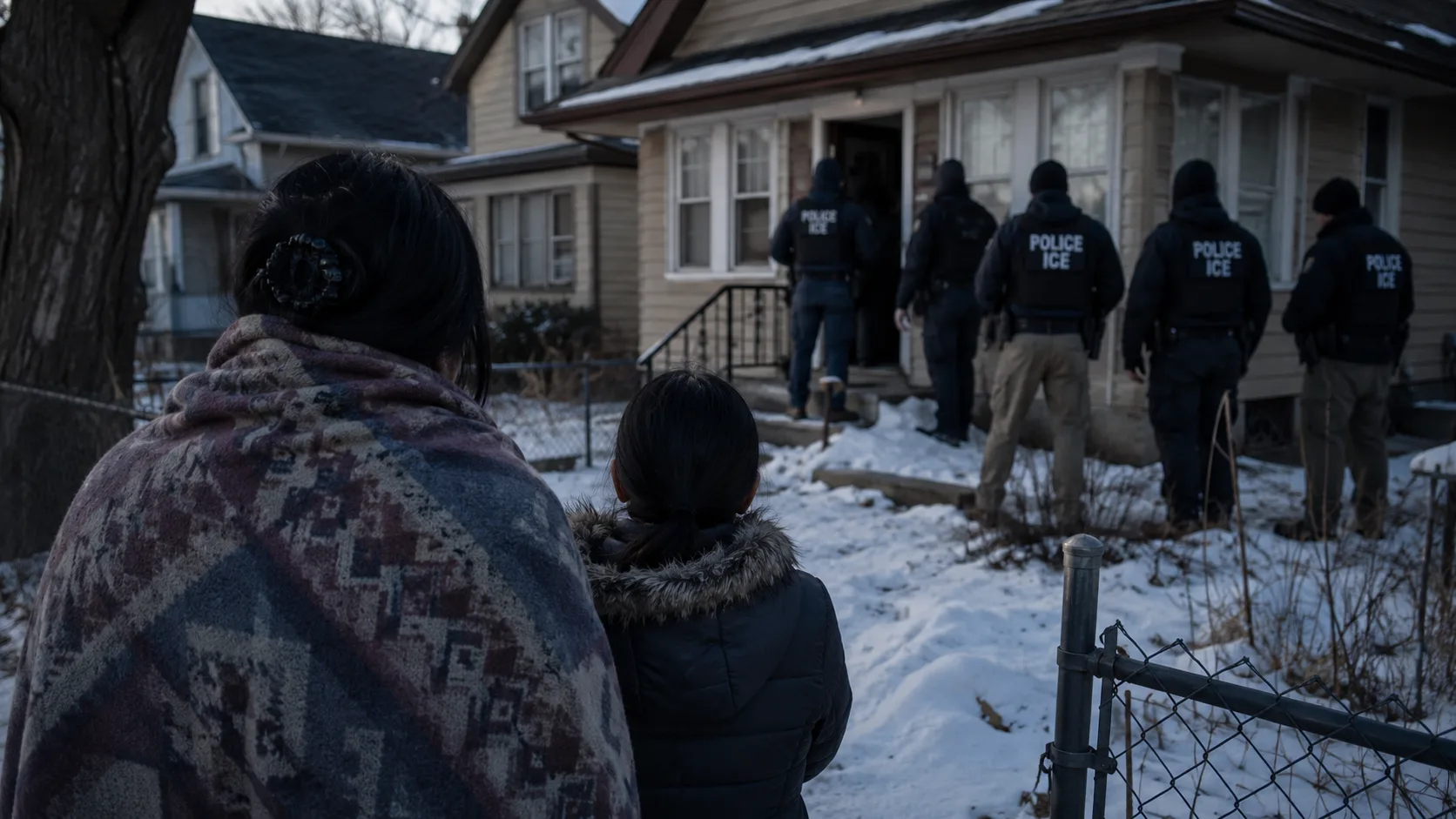
Among the cases the report highlights is one that hit close to home for many of us here. In January, ICE agents in St. Paul bashed in the front door of ChongLy "Scott" Thao — a Hmong immigrant — and, without a warrant, held him at gunpoint and dragged him into the snow of his front yard while he was wearing only sandals, shorts, and his grandson's blanket as a makeshift shirt. That image went everywhere when it happened. Seeing it resurface in a national publication seven months later is a reminder that what happened to Scott Thao did not stay in St. Paul — it became a symbol of what this enforcement wave looks like on the ground.
The Broader Pattern
The Hmong community's experience in Minnesota didn't emerge in isolation. From January to mid-October 2025, approximately 970 Vietnamese, Cambodian, and Laotian individuals were deported by ICE. For Laos specifically, deportations in 2025 more than doubled compared to prior years — including the deportation of refugees — marking the highest level of Hmong and Lao deportations in the last 15 years.
These removals have immediate ripple effects: spouses and children lose caregivers and primary wage earners, families face abrupt economic and emotional crises, and community institutions lose long-standing members who are deeply rooted in Minnesota. That's not abstract. That's Hmongtown. That's the east side of St. Paul. That's Coon Rapids and Brooklyn Park.
What Advocates Are Saying
Local organizations have been fighting this since it escalated. In Minnesota, where Hmong people are the largest Asian community, advocates have argued that this moment demands solidarity — and that when state violence escalates, communities must show up for their people together and without hesitation.
On the legal side, the picture remains complicated. It's difficult to know the full spectrum of criminal violations for which people are being deported because ICE doesn't publicize every arrest, and immigration cases are considered "confidential" — unlike regular criminal court proceedings, the public cannot access immigration court filings or hearing schedules. That opacity has made it hard for families to get ahead of what's coming, and hard for the community to hold anyone accountable.
Advocates and legislators have continued to push for the Southeast Asian Deportation Relief Act, which would end the deportation of Southeast Asian American refugees and provide a pathway for them to live and work in the United States. That bill has not advanced.
The Long View
What the national report does — and what sometimes gets lost in the day-to-day churn — is connect the individual cases to the larger historical betrayal that many in the community feel. The Hmong community has a long history with the United States, having supported Washington during the Vietnam War in the 1960s — and now its members are experiencing confusion and a sense of betrayal as ICE agents target them as part of the broader immigration crackdown.
That history isn't background. It's the whole point. The men and women being swept up in these operations — many of them born in refugee camps, many of them arriving here as children — came to this country because of a promise. The national media is starting to say that out loud. We've been saying it for a while.